Vancouver, BC — March 25, 2026 — On the one-year anniversary of the Mineral Claims Consultation Framework (MCCF), the Association for Mineral Exploration (AME) is urging immediate action to approve mineral claims ahead of the 2026 summer season.
Recent data reveal that the median number of days for explorers to receive a decision on mineral claims has risen to 143 – exceeding government’s commitment to a 90–120-day service standard. Accounting for applications that are still pending, only 14.8% of applications were processed within 120 days. In fact, many claims from November to January waited for as long as three months before being sent to the relevant First Nations for consultation. This exceeds the promise to distribute claims for consultation on a monthly basis.
“I have submitted 27 mineral applications since September 2025, none of which have been approved yet. I’m worried that I won’t get the claims ahead of the summer, which may impact my ability to get to them to complete work, particularly the ones in higher elevations that have a short summer season,” said President of Tripoint Geological Services Ltd. Darcy Vis about the current state of the system.
AME research shows that a steadily growing backlog is outpacing governments’ ability to approve claims. This means that it is unlikely that the government will meet their service standard without significant and immediate intervention.
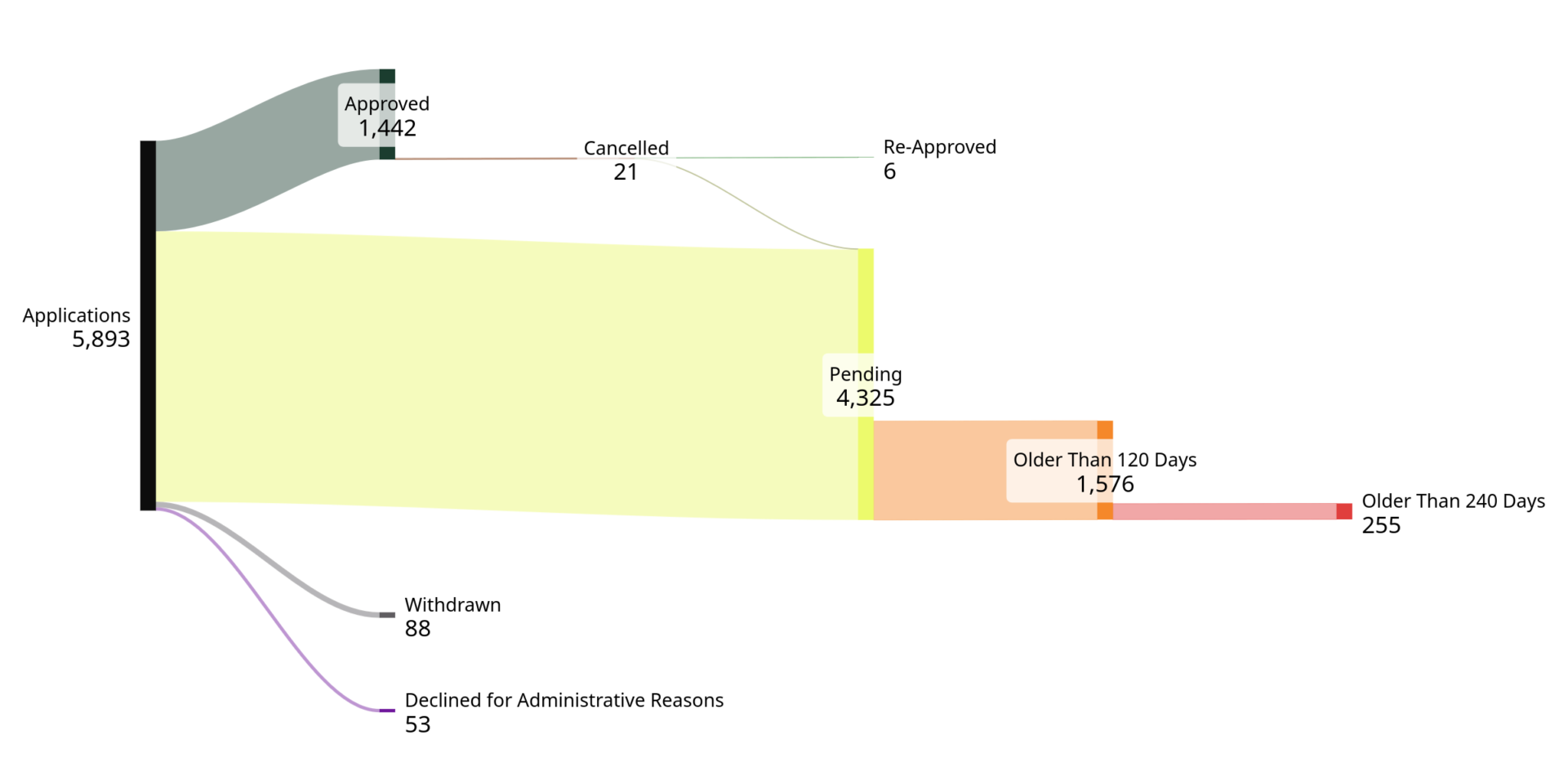
AME President and CEO Todd Stone said, “There are claims still in the system that were staked a full year ago. British Columbia can only assume its critical minerals leadership role on the world stage if claim staking service standards are met consistently, thus providing required project certainty. More expeditious consultation with First Nations must be prioritized with government taking a lead role to assist First Nations with the capacity needed to achieve service standards. Government has an obligation to protect the honour of the Crown in consultation, but also must have a concurrent duty to the public interest and to mineral explorers to ensure decisions are made in a timely manner.”
AME advocacy led to the inclusion of $2 million/year in BC Budget 2026 over the next three years to help staff and operate the MCCF system, yet we need more action from government today to truly fix this system to enable the minerals for tomorrow that we will need for emerging and existing technology and defence applications.
“At the end of the day, our members deserve a system that functions within a consistent timeline and set of rules. If we’re going to capitalize on the current commodity cycle and explore for the minerals we need for the future, we need the government to double down on its efforts to solve this issue today,” said Stone.
AME continues to propose pragmatic solutions such as:
- Removal of applicant names until claims are approved.
- Escalation of claim applications to a more senior level, or emergency process after reaching certain timing gates.
- Recognition that “approval delayed is approval declined” – the global mineral exploration industry will pursue other opportunities if approvals for BC claim applications cannot be obtained promptly within the 120-day timeline.
- Given the significant delay in decisions, allowing work done on claims during the applications to count toward the value of work on that claim, or block of claims would help companies bridge the gap caused by the seasonality of exploration.
- Allowing for companies to apply for a claim and voluntarily pause the process to allow for them to engage with Nations themselves resulting in protecting “first in line status” and allowing for voluntary early engagement.
- Introduction of more transparent statuses in the MCCF, such as indicating the time applications spent with each party.
- Improving the transparency of public application data by adding columns for the application date, application ID, and decision time of approved claims to the “MTA – Mineral, Placer and Coal Tenure Spatial View” dataset.
- Claims that have been approved but are dropped in the future should not be subject to further consultation as they have already been reviewed.
- Capacity funding for First Nations to allow for timely processing of claims.
To date, any claim applications that have been denied relate to “administrative” reasons such as the deletion of intervening claims per Section 67 of the Mineral Tenure Act. No applications have been denied for consultation reasons.
AME will release a report in the coming weeks with further research into the new claim staking system.
About AME
AME champions mineral exploration as the foundation of Canada’s economic independence. We connect exploration to mineral development, clean technology, and national security. Through member advocacy, we ensure exploration remains central to Canada’s sovereignty and economic future.
Learn more, sign up for updates, and get involved at mineralsfortomorrow.ca.
AME Contact
Kathleen Reid
604-724-1242
[email protected]