
We spend a lot of time telling young people to follow their passions. But how do you follow a path you’ve never been shown? I didn’t discover geology until I turned 30.
Growing up, geology was never on my list of what “grown-ups” do, it was simply never a part of the conversation. Coming from an oil and gas town, I only really saw related jobs to help this industry thrive. I knew I didn’t want a job similar to anything I had exposure to, but I had no idea where to go from there. I left my hometown, gained my own experience and found some hobbies. Looking back now, all these hobbies and things I gravitated towards included outdoors, adventure, science and exploring.
Realizing that not all “grown up” jobs need an office or desk was the initial shift for me. I still remember when it finally hit me that I had fallen into the category of people who were ‘living for the weekend’, spending my weekdays eagerly anticipating the moment I could get outside. Then maybe I saw a surveyor on the street, or a plane fly overhead but these people were not tied to one spot, they were part of a much larger picture.
When the COVID pandemic hit I realized just how much I did not enjoy my current position, but at 30 years old, where do I even start? For me, it began by narrowing down what I like and don’t like – I started taking classes at Douglas College, the first semester included Intro to Earth Science and Intro to Environmental Science. Earth Science was the clear winner here. Next semester brought Astronomy and Resources from the Earth and it turns out my brain absolutely loves big picture concepts. However, realistically a career in astronomy doesn’t make a lot of sense – mining though? … That was the answer! It combines contributing to big ideas, exploring what the earth has to offer, and every day could be something new. I immediately registered for the Geological Resources Diploma Program.
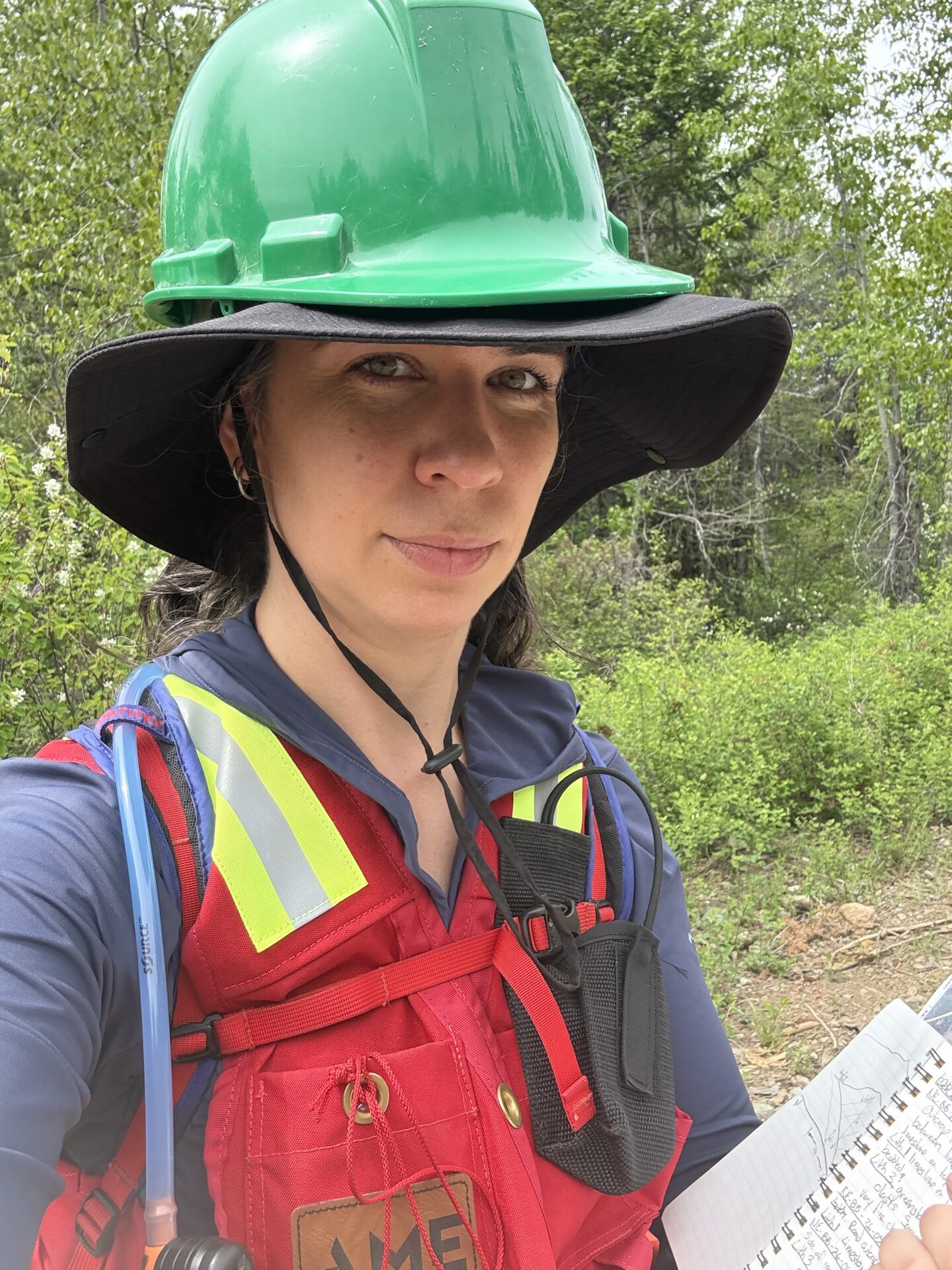

This year, 2026, I’m graduating from this program. 6 years, 1 summer field job and 2 kids later, working almost full time when not on maternity leave – it’s been a challenge, but I think I’ve found where I belong. Now when I’m out camping with my family, we stop and look at how the rivers cut through the mountains, we pick up the sparkly mineralized rocks, we debate how we think the rock got there, and I couldn’t be happier.
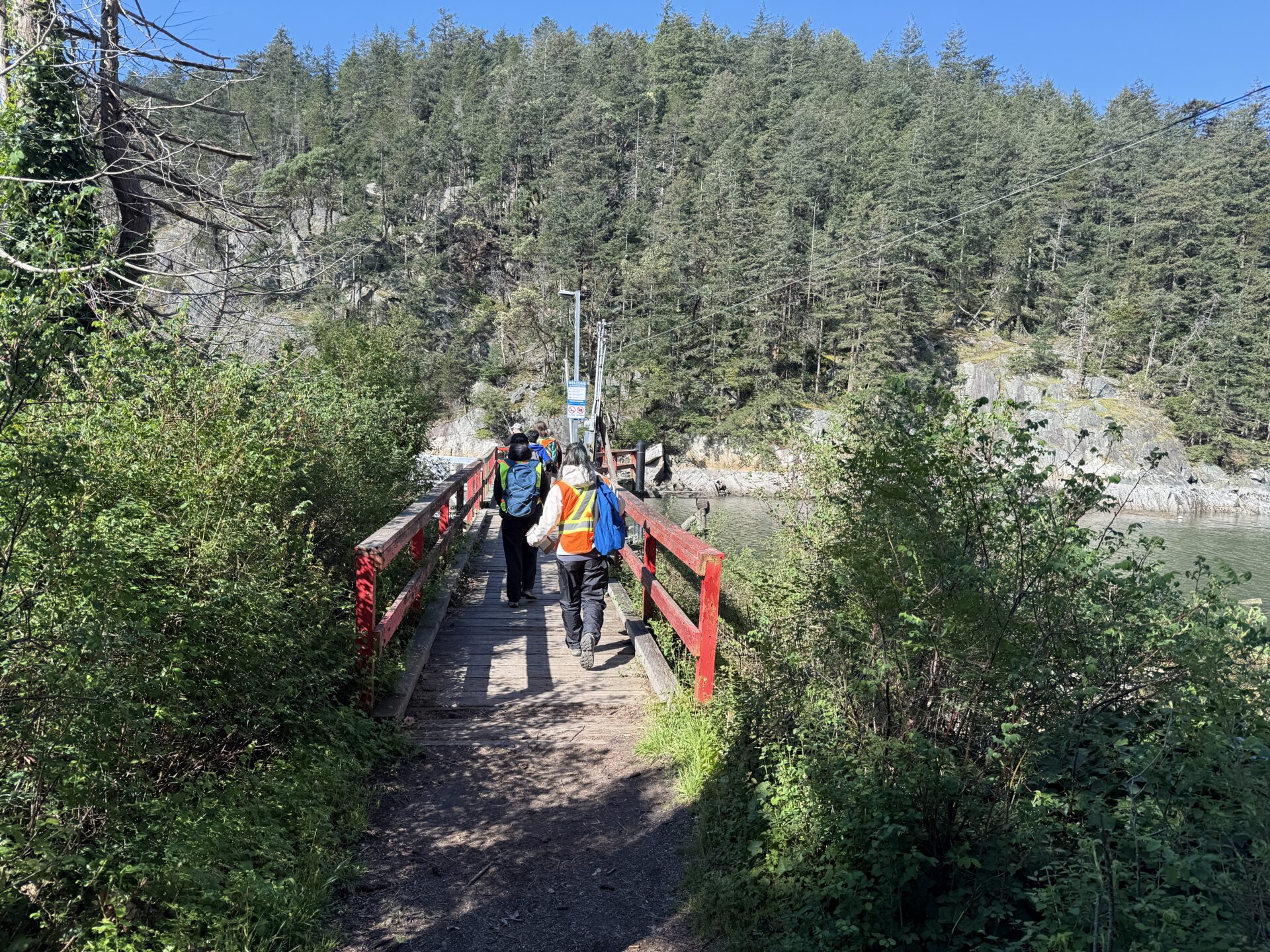
In May, I attended my final class of the Geological Resource Diploma Program from Douglas College. This class, Field Methods 2, is a two-and-a-half-week intensive field school where students get out of the classroom and put their learning to the test.
We saw rocks that were hundreds of millions of years old. Others were relatively young. Sometimes we could clearly see where two very different rock units met, and our job was to figure out how they ended up side by side despite forming in different places and at different times. Other times, the evidence wasn’t as obvious, and we had to piece together the story from the clues we could find. By the end of the class, I had covered roughly 130 km on foot—most of it off-trail, carrying field equipment and stopping every few meters to examine the geology.
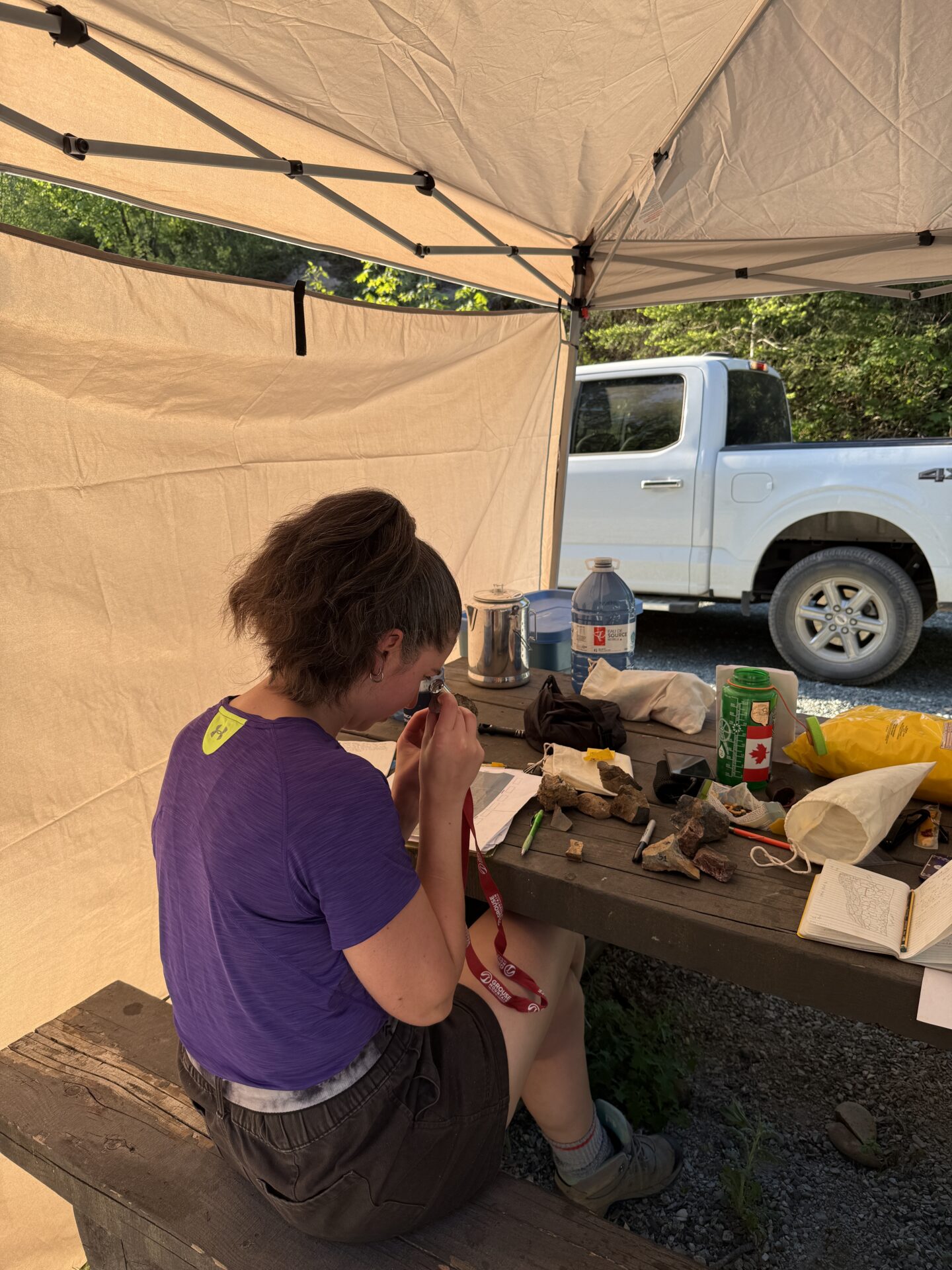
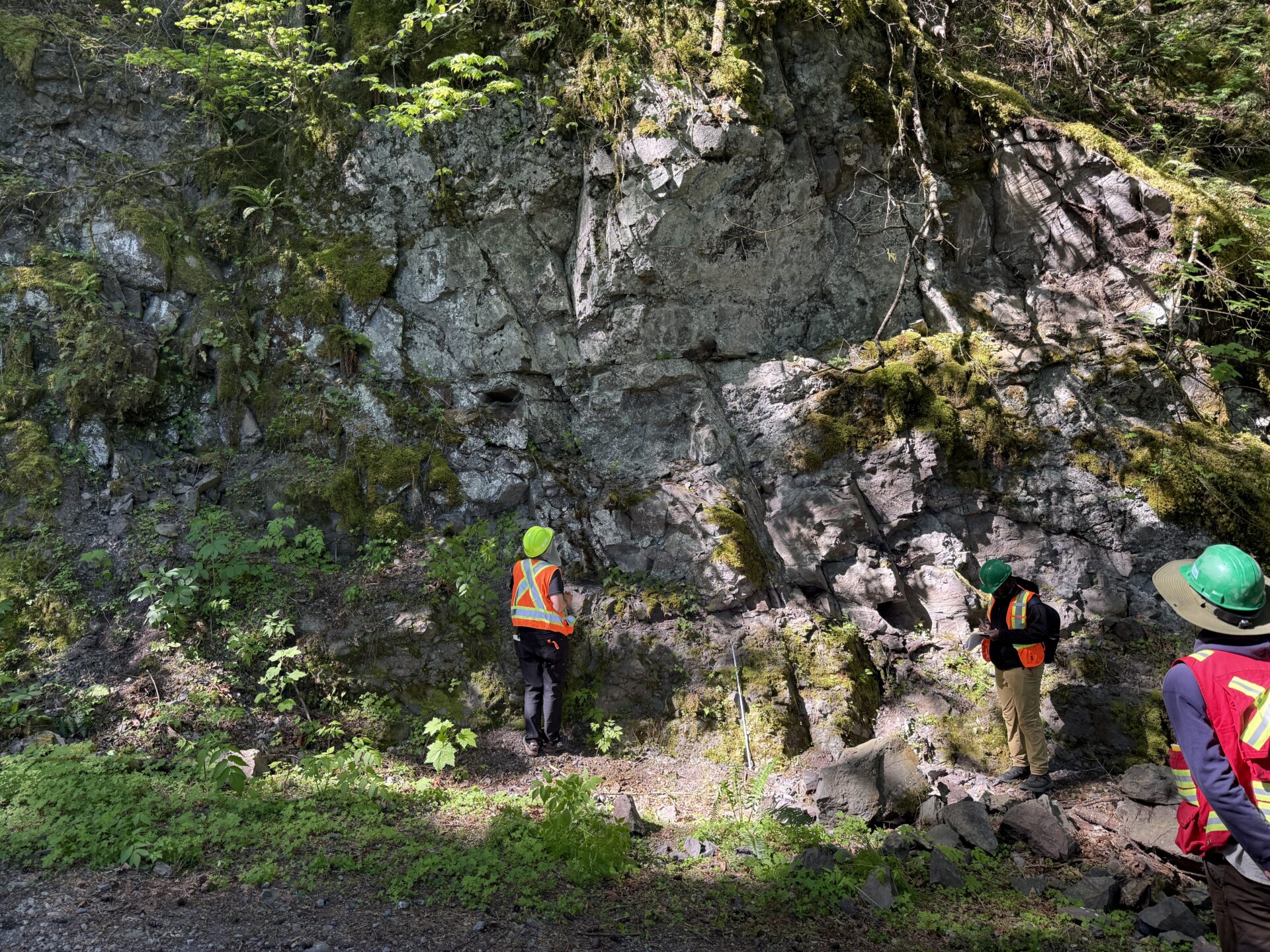
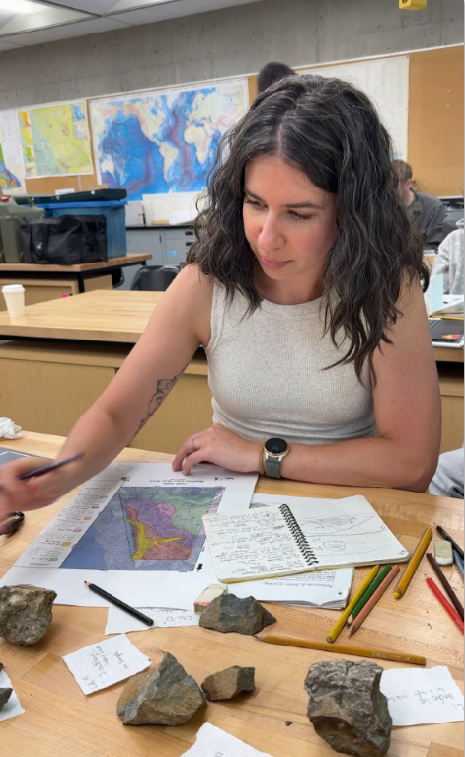
Despite field school acting as my classroom, there were more lessons learned than just academic. I learned that I’ll never take the easy way up. If there’s a contact to map, I want to see it for myself. More than once, that meant hiking over a hill and through a river instead of taking the obvious route. I also learnt that many of the things in life that bring me the most gratitude include breathing fresh air, the sun on my face and using my brain. And I’ve learned that I’m far more interested in understanding the story than memorizing the vocabulary. Naming rocks has never been my favourite part of geology, but visualizing continents colliding, mountains forming, and minerals depositing over millions of years? I’ve spent hours thinking about it.
Field school taught me a lot about geology, but after some reflection, I think the biggest thing it taught me wasn’t about rocks at all. I loved looking at the landscape and trying to understand the story hidden within it. Somewhere halfway up a hill I probably didn’t need to climb, I caught myself grinning. That’s when I finally recognized the feeling I’d been trying to put words to. I found myself wishing I had discovered geology sooner.
Part of me wishes I had known this path existed when I was younger. Maybe I would have spent summers working as a field geologist. Maybe I would have taken my degree full-time. Maybe I would have followed a more traditional route into the industry. But the more I thought about it, the more I realized that wasn’t really what was bothering me.
What bothered me was that geology was never part of the conversation when I was growing up. I knew about trades. I knew about oil and gas. I knew about office jobs. I knew about the careers I could see around me. But nobody ever told me there were careers built around exploring, problem-solving, and spending time outdoors.
Nobody told me that people got paid to ask questions about how mountains formed, why minerals occur where they do, or what stories the rocks beneath our feet might tell. Standing on a hill, soaking in the view, I wasn’t thinking about how my life would be different if I had found geology at 18. I was thinking about how much younger me would have loved this.
And maybe that’s the real lesson. I’ve found something that genuinely excites me, and not everyone gets to say that.
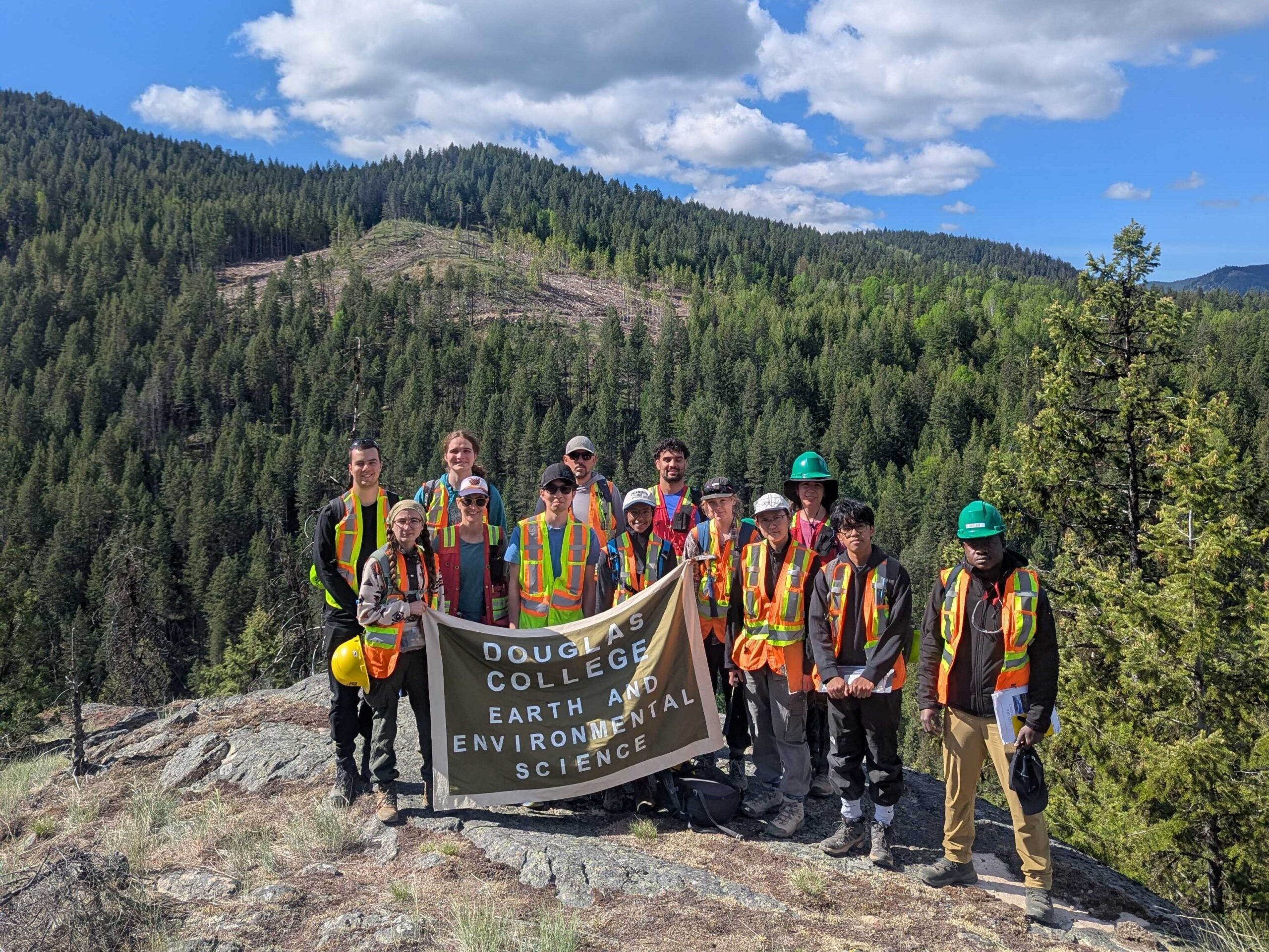
Geology taught me that stories don’t unfold in straight lines—and neither do careers. If there’s one thing I hope someone takes away from this story, it’s that there are probably people out there just like I was—people who love being outdoors, love science, love understanding how things work, and have no idea that geology or mineral exploration exists as a career path.
I may have found geology later than I wanted to, but I’m incredibly grateful that I have.
Nikki Eby is the Exploration Data & Policy Analysis Coordinator at the Association for Mineral Exploration. Watch Nikki’s reflection video of this field trip here.